Search This Blog

Tuesday, 15 February 2011

Deptford Creek

Today our tutor didn't show up and since I wasn't really in the mood to sit in the studio I went on a little jaunt round Deptford Creek. I thought it was relevant to our project because it has several previously derelict areas that are being made into subsidised artists studios such as The FairCharm and also the Creekside Project, a community based project in which they get together to clean up the river at low tide and try to recycle the dozens of trolleys etc. that they find. I've signed up to their next low tide walk because I thought those waders were a good look. Not really, I'm quite intrigued as to what kind of objects you find on such an outing. Unfortunately that's not until March 26th so not much potential for using my findings for my current project unless I have a complete outfit overhaul in 4 days! I took several photos but in particular I found the contrast, especially in today's grey light, of the violets and greens of the Trinity Laban building and the greens and browns of the river very striking. The reflection of the Trinity Laban building in the water was also fascinating. 


Transitions project Moodboards

Ok so I was very skeptical about the idea of making a 'moodboard' and I had images of Carol Smillie pointlessly running about in late 90s episodes of Changing Rooms in my head. However...my ideas were thin on the ground and I saw the potential for this exercise generating a few more. It actually really helped me just put down anything I found relevant to the project and link these visual images. I am still keen on the idea of using everyday objects bought in Brixton and ones that represent Brixton in some way such as the teacups and turning these into materials. I also found in a charity shop in Brixton a vintage dress making pattern. I thought this would be really useful to use with unusual materials and fabrics bought from the area. There could be a wonderful juxtaposition between the very English and quite dated blouse being made out of bright African textiles such as the one I have placed the pattern next to in the photo. When we were looking around Brixton we found some quite shabby backstreets including one sort of courtyard called 'Clifton Mansions' surrounded by really rundown buildings that were surely occupied by squatters; I got this impression from the loud music coming from inside at about 3pm and double door (hard to explain, see photo). I've always been interested in getting ideas from what appears to be worthless junk as you can make it really beautiful if you deconstruct and reconstruct a little. Such as in the courtyard there were tyres filled up with earth and with a tiny plant poking out; this could be the starting point for a concept combining a material such as rubber which is totally non-biodegradable with something completely natural and compostable. I am really keen to use mainly ecologically beneficial materials. This links nicely with my object analysis project in which I am researching the work of Annie Sherburne who has her own range of recycled yarns, eco-annie. 


Sunday, 13 February 2011

Object analysis proposal


I have chosen to base my object analysis theory task on the rug 'Soft Cobbles', designed by the textiles artist Annie Sherburne. I came across Annie Sherburne whilst doing some last minute yarn shopping on the way to the Oxo Tower and had never expected to find such an inspirational range of pieces in such a small space. Whilst the rug I have since become interested in wasn't on display, there was a vast range of yarns called 'Eco Annie'. Using textile waste from London, Eco Annie, her yarns that reflect a long time passion for sustainable design, are an established manufacturing chain making recycled yarn for use by knitters and weavers; she also solely uses these in the production of her own rugs. Her ideas incorporate a heavy emphasis on Textile Environmental Design and aesthetically pleasing and physically pleasing (in terms of touch) design. 'Soft Cobbles' uses ecologically friendly materials; rare breed wool fibre from small holdings in the UK, are felted into balls and sewn together with cobblers twine. The balls look like pebbles and are especially effective in this way on a large scale and yet they're soft to walk on. This design won the Peugeot design awards in 2001 and reached the final of the classic design awards at the V&A. I am really excited at the prospect of similarly emulating my natural surroundings using ecologically friendly materials. 

Saturday, 12 February 2011

Ethical Consumerism

Just had another instalment in our series of lectures and seminars on consumerism. Really interesting in terms of highlighting our lack of understanding of whether something is as ecologically and ethically sound as the advertising and manufacturers make out. Many companies, Primark being one that comes to mind, are accused of creating a 'Halo Effect'. This meaning that they implement very small measures such as ensuring that one product out of hundreds of others is made with organic cotton or from Fairtrade farmers so as to give the consumer the impression of a company involved in ethical initiatives. We had a seminar on Ethical Consumerism shortly after this lecture and were each given an initiative or charity to do a SWOT analysis of (very useful analysis I wasn't familiar with that categorises strengths, weaknesses, opportunities and threats). I was given the Ethical Trading Initiative, which seeks to make substantial improvements in the lives of poor working people around the world by developing, and encouraging the use of, a set of standards in trade. This is known as the ETI Base Code, a set of guidelines that constitutes the minimum standards that members have to adhere to in the workplace, http://www.ethicaltrade.org/eti-base-code. Whilst this is definitely a step in the right direction for the member companies, there are several drawbacks. For one, the ETI is almost a victim of its own success; it has 40 major companies under its wing that combined have a revenue of several hundred million. Just to give an idea of the number of workplaces ETI therefore has to monitor, Gap which is one of its members currently manufactures clothes in 300 factories spanning 50 countries worldwide. It is thus very difficult to ensure workers' rights at every stage of the supply chain. Furthermore, the improvements made by companies can be very gradual as they are only required to submit a report of their movements related with ETI once a year. They can also afford to make changes in some factories and not others and simply highlight the ones they have made. There had recently been a general feeling that the ETI hasn't fulfilled the hopes of many in terms of making change; when it was set up ten years ago people believed it would be very efficient in changing working conditions. Nowadays it seems more like a shield for major companies to prevent further investigations into every stage of their supply chain. Having said that, the ETI can address many thorny issues that the company could not tackle on their own. As most companies don't actually own the factories in which their clothes are manufactured and they simply contract with garment manufacturers round the world, it means they don't know how to approach issues within these factories. By this I mean that if they found children working in a supplier's worksite, they might be inclined to evict them and think that  they've addressed the situation. This is not the case as it could paradoxically make the lives of the children worse; the ETI could very quickly pinpoint who they needed to have discussions with and address the situation in a more appropriate manner. They can collaborate with NGO and Trade Unions to make workers feel as comfortable going to work with the reassurance that they have rights as you or I would.

Thursday, 10 February 2011

Workshop Inductions and a few more Brixton ideas


Today we had our workshop inductions and whilst I had already been shown everything at Chelsea last year on my foundation course they were useful in giving me some ideas for this Brixton project. For one, it was interesting to see how in some students' work that the various technicians had used as examples the sheer amount the specialisms all overlap. For example, there was an MA Textiles student who had worked into different types of wood such as walnut with leather detailing and she had made a collection of these tiny but beautiful wooden blocks. Furthermore, there was a student who had used plates sourced only from charity shops and printed onto them in the ceramics workshop. This was my biggest influence today, simply because it got me thinking about using objects and clothes from Brixton charity shops, tea cups being particularly relevant given the number of coffee shops in Brixton Village Market. Whilst tea cups aren't so much geared towards an eventual design for the Fashion Show as I would have to use them in a very literal way, possibly by printing, I could use them in a more Gaga-esque outlandish context...

Wednesday, 9 February 2011

Brixton Transitions Project- Initial thoughts

Having already been assigned Brixton for our 'Rough Guide' I feel at a slight advantage, mainly because I had a good sense of the geography of the area (which even in Greenwich, where I live, is at times hazy)! On first impressions of Brixton Village it seemed a bit derelict and uneventful; there were several places closed or closing up already at just 2pm and it stank of fish and raw meat. However, after my friend found a lovely little vintage handbag we got talking to the shop owner who informed us that Thursdays and Fridays were a much better atmosphere; apparently all the shops are open late and there's food stalls and craft stalls everywhere. In terms of the 'Transitions' project I've had a few ideas. I really enjoyed the idea of the Brixton pound and the little quirks that make this small market such a community such as the coffee shops that reduce the price of your coffee if you use your special Brixton mug, it's also very ecologically friendly. There are a few pop-up shops and galleries in the market where you can buy clothes made in the shop and look at local artists' work. Today I was really interested in a shop where the lady produced handbags and clothes using salvaged and recycled leather. She stitched on the irregular shaped pieces of leather in very asymmetric designs with lots of folds to a very aesthetically pleasing effect. Hopefully I can get some photos of these designs shortly but the designer wasn't in the shop at the time and I wanted to ask her permission. There was also a gallery called Viewfinder (http://www.viewfinder.org.uk/) in which there was the work of 3 photographers, Catlin Harrison, Kerry Clark and Kelly Brown in an exhibition called 'Constructs Spectacle and Self'. In particular I loved the animated and intriguing photography of Kerry Clark (pictured below).


Tuesday, 8 February 2011

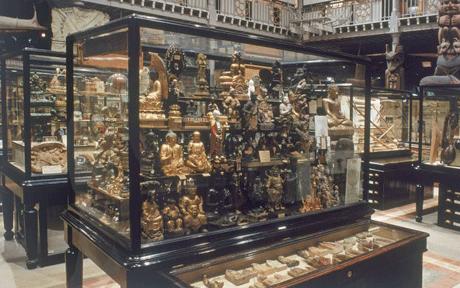
Collecting things, collecting people

Ok so this should have been posted way back along with my writing on 'What would you collect to symbolise how you think about life?'. In our lecture from Clare Rose, on November 5th 2010 she talked about how people have collected things throughout time and the different reasons for which people have treasured certain things. We discussed a huge range of objects large and smalls that have been collected and kept in a somewhat in a somewhat controversial way. More on that later. Museums originated from personal collections and were very often a means of showing your wealth and extensive travels. Whether or not these collections were merely a display of status once upon a time for the collector, they are hugely important to us today because they document a period of time. The collections displaying wealth and status were known from the 1500s as 'Cabinets of Curiosities'. It was incredibly fashionable for the upper class to acquire objects of interest from around the world from as many exotic places as possible. One man who broke this tradition of collecting things that were beautiful or unique was Augustus Pitt Rivers. His insistence on collecting the everyday objects was his most important methodological innovation and it has in many respects shaped museums' collections since. Another massive innovation of his was to arrange items typologically- by what they were in order to highlight the evolutionary trends in human artefacts. Within these collections based on type they were also arranged chronologically. The several thousand objects he collected in his lifetime have been added to since to form a collection of roughly half a million and they now form the Pitt Rivers Museum in Oxford.